Blog
Everything You Need to Know About Respiratory Equipment and CPAP Therapy in Ontario
If you or a loved one has been diagnosed with sleep apnea, knowing where to start can feel overwhelming. Respiratory equipment for sleep apnea centers around CPAP therapy. However, understanding how it works, what devices are available, and how to access care in Ontario makes the process much easier. This guide gives you clear, practical answers whether you are newly diagnosed or looking to improve your current setup.
What Is CPAP Therapy and Who Needs It?
CPAP therapy delivers pressurized air to people whose airways collapse repeatedly during sleep. Doctors prescribe it for obstructive sleep apnea, the most common form of the condition. When the airway collapses, blood oxygen drops and the body briefly wakes up. As a result, sleep is fragmented and the heart and brain do not get the rest they need.
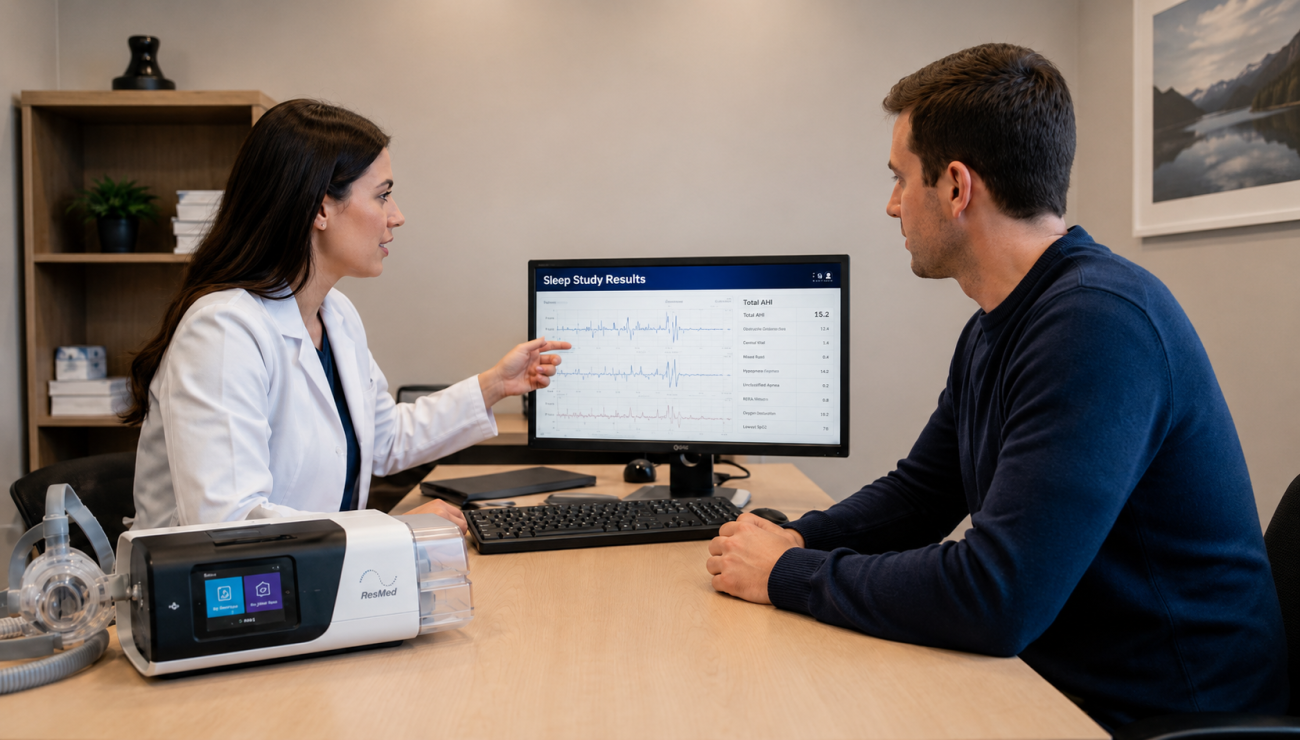
Your doctor measures your sleep apnea severity using a sleep study, either in a clinic or at home. The study tracks how often your breathing stops per hour and how much your oxygen levels drop. If your results confirm obstructive sleep apnea, CPAP therapy is almost always the first treatment recommended.
CPAP therapy is not a one size fits all solution. Therefore, your care team assesses your breathing patterns, sleep position, and lifestyle before recommending a device and pressure setting. Getting this right from the start is the most important first step.
To understand more about how sleep apnea is diagnosed and what your results mean, visit the sleep apnea information page at Ontario Sleep Care.
Types of Respiratory Equipment for Sleep Apnea
CPAP equipment covers a range of devices and accessories. Understanding each one helps you shop more confidently and have better conversations with your care provider.
CPAP machines deliver a fixed steady pressure throughout the night. They are the standard starting point for most obstructive sleep apnea diagnoses. APAP machines, or auto adjusting PAP devices, read your breathing in real time and adjust pressure automatically. Many patients find them more comfortable, particularly if their apnea varies by sleep position.
BiPAP machines use separate pressures for inhaling and exhaling. They typically suit patients who struggle with standard CPAP at higher pressures or who have certain respiratory conditions alongside sleep apnea.
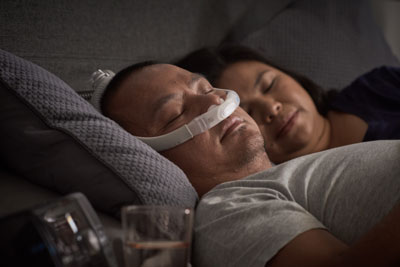
Masks come in three main styles. Full face masks cover both the nose and mouth. Nasal masks cover only the nose. Nasal pillow masks rest just inside the nostrils and offer the most minimal profile.
For a deeper look at choosing the right style, read the guide on finding the right mask type for your CPAP therapy.
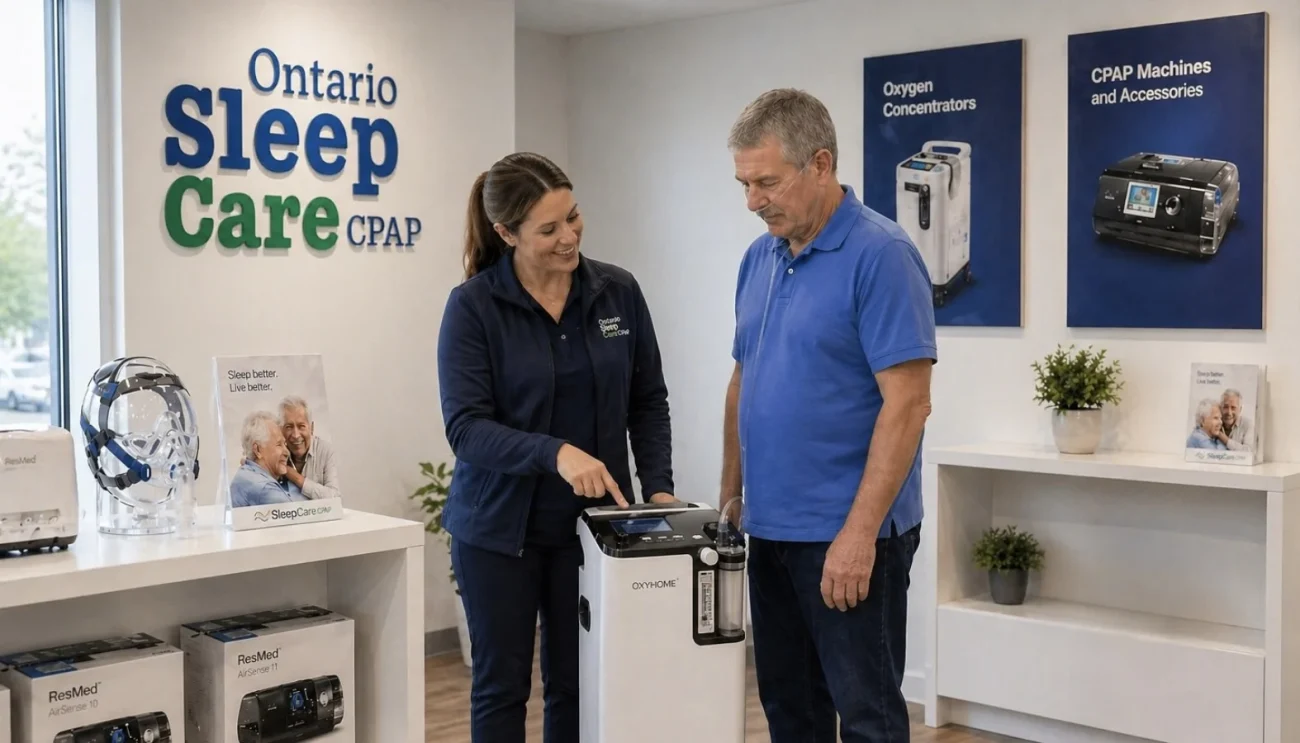
Accessories are also part of your ongoing needs. Filters, tubing, humidifiers, and cushions all wear out and need regular replacement. Keeping these fresh is essential for both hygiene and therapy performance. You can explore the full range of respiratory devices and supplies at the Ontario Sleep Care patient store.
How to Access CPAP Therapy in Ontario
Accessing CPAP therapy in Ontario follows a clear process. First, your physician assesses your condition and refers you for a sleep study. Then, a Sleep Clinician confirms your diagnosis and recommends the right device and pressure settings. Finally, an approved CPAP provider sets up your equipment and teaches you how to use it safely.
Ontario’s Assistive Devices Program (ADP) covers a portion of CPAP equipment costs for eligible residents. To qualify, you need a valid OHIP card and a confirmed sleep apnea diagnosis. Your provider handles most of the paperwork on your behalf, which simplifies the process considerably.
Choosing the right supplier matters. Look for a clinic that employs Sleep Clinicians, offers ongoing follow up, and coordinates directly with your physician. A good CPAP provider stays involved in your care long after your first appointment.
For a full picture of what patient support looks like at Ontario Sleep Care, visit the information page for patients. Additionally, if you have questions about how sleep apnea treatment options connect to your breathing challenges, the sleep apnea treatment options page offers clear, practical guidance.
Respiratory Equipment at a Glance
The table below compares the most common types of respiratory equipment. Note that Ontario Sleep Care specializes in CPAP and PAP therapy for sleep apnea. For home oxygen needs, your physician will connect you with an appropriate licensed provider.
| Equipment Type | Best For | Power Required | Portable? | Notes |
|---|---|---|---|---|
| CPAP Machine | Obstructive sleep apnea | Yes | Travel units available | Primary treatment for OSA. Ontario Sleep Care specializes in this. |
| APAP Machine | Variable apnea, comfort preference | Yes | Travel units available | Auto adjusting pressure. Ontario Sleep Care specializes in this. |
| BiPAP Machine | Complex sleep apnea, high pressure needs | Yes | Limited | Speak with your physician about eligibility. |
| Stationary Oxygen Concentrator | COPD, pulmonary fibrosis, low SpO2 | Yes | No | Requires physician prescription. Contact a licensed oxygen provider. |
| Portable Oxygen Concentrator | Active patients needing oxygen on the go | Battery or AC | Yes | Requires physician prescription. Contact a licensed oxygen provider. |
| Compressed Oxygen Cylinder | Backup, short outings | No | Yes | Requires physician prescription. Contact a licensed oxygen provider. |
What to Expect From Your CPAP Provider
A reliable CPAP provider does more than deliver a device. They play an active role in your ongoing care. When your equipment arrives, a Sleep Clinician should walk you through setup, mask fitting, and daily maintenance. Therefore, never hesitate to ask questions during this first appointment.
Ongoing service matters just as much as the initial setup. Your provider should check in regularly, respond quickly if equipment fails, and replace worn parts on schedule. For example, masks, filters, and tubing all need periodic replacement to keep your therapy working safely. A good provider tracks this for you.
It also helps to keep spare supplies on hand. Staying on top of replacements keeps your therapy effective and your equipment hygienic. If you use a CPAP device as part of your respiratory care, read the guide on cleaning and sanitizing your CPAP equipment to keep your device in top condition between service visits.
Home Oxygen and CPAP: Understanding the Difference
Some patients ask whether home oxygen therapy is part of sleep apnea treatment. For most people, it is not. CPAP therapy alone resolves the breathing disruptions and overnight oxygen drops associated with obstructive sleep apnea.
Home oxygen therapy is prescribed for patients with persistently low blood oxygen levels due to conditions like COPD, pulmonary fibrosis, or heart failure. A physician must assess and prescribe this separately from CPAP therapy. Therefore, if you think you may need supplemental oxygen, speak with your doctor directly.
Some patients with complex conditions need both CPAP and supplemental oxygen. In those cases, your physician coordinates both treatments based on your diagnostic data. Ontario Sleep Care focuses specifically on CPAP therapy and sleep apnea care.
Frequently Asked Questions
Does OHIP or ADP cover CPAP equipment in Ontario?
OHIP does not cover CPAP equipment directly. However, Ontario’s Assistive Devices Program (ADP) covers a portion of costs for eligible patients. You need a valid OHIP card and a confirmed sleep apnea diagnosis to qualify. Your CPAP provider handles the ADP paperwork on your behalf.
How do I know what pressure settings I need?
Your physician and Sleep Clinician determine your pressure settings based on your sleep study results. They review how often your breathing stops and how much your oxygen drops during the night. Never adjust your pressure settings on your own. Changes to your prescription should always go through your care team.
Can I travel with CPAP equipment?
Yes. Most modern CPAP machines are designed for travel and work with international power supplies. Airlines allow CPAP devices as medical carry on items. Your provider can help you prepare the documentation airlines typically require. You can also read the guide on travelling with CPAP equipment for practical tips.
How often should I replace my CPAP supplies?
Masks and cushions typically need replacing every three to six months. Filters should be changed monthly, or more often if you have pets or allergies. Tubing generally lasts about three months. Staying on schedule keeps your therapy effective and your equipment hygienic.
What is the difference between CPAP and oxygen therapy?
CPAP therapy uses pressurized air to keep your airway open during sleep. It does not deliver supplemental oxygen unless a separate oxygen addition is prescribed. Home oxygen therapy delivers concentrated oxygen to raise your blood oxygen levels. Some patients need both, while others need only one. Your doctor will determine the right combination based on your diagnosis.
Getting the Right Respiratory Equipment for You
Finding the right respiratory equipment starts with a clear diagnosis and the right support team. CPAP therapy can make a dramatic difference in your energy, sleep quality, and overall health. However, equipment alone is not enough. Ongoing care, proper maintenance, and a responsive provider are equally important.
If you are ready to take the next step, contact Ontario Sleep Care today to speak with a Sleep Clinician about your CPAP options.