Blog
How to Choose the Right Sleep Apnea and CPAP Clinic in Ontario
Most people don’t go looking for a sleep apnea test on a whim. By the time you’re searching for answers, you’ve probably been tired for months. Your partner has nudged you about the snoring. You’ve woken up with headaches you can’t explain.
Whatever brought you here, you’re right to take it seriously. Choosing the right clinic, one that explains what’s happening and follows through with you, makes a real difference. Here’s what to look for.
Do You Actually Need a Sleep Apnea Test?
A lot of people wait too long. The symptoms of sleep apnea tend to build gradually. So it’s easy to chalk them up to stress, age, or a busy schedule.
Common signs that it’s time to get evaluated include:
- Loud, chronic snoring, especially if others have noticed pauses in your breathing
- Waking up gasping or feeling like you haven’t slept
- Daytime fatigue that doesn’t improve no matter how much rest you get
- Morning headaches or dry mouth
- Difficulty concentrating or staying focused
If you recognize more than one of these, it’s worth booking a proper sleep apnea test rather than waiting it out. Untreated sleep apnea carries real health risks over time. These include cardiovascular strain, blood pressure issues, and metabolic effects.
What Happens at a Sleep Study Clinic?
A sleep study clinic is where diagnostic testing actually happens. There are two main formats. A good clinic will help you figure out which one fits your situation best.
In Clinic Sleep Studies
In clinic studies involve an overnight stay. Equipment tracks your breathing, oxygen saturation, heart rate, and sleep stages throughout the night. This option is more comprehensive, particularly for complex or unclear cases.
Home Sleep Testing
Home sleep testing uses a portable device you take home and wear overnight. It’s more comfortable for most people and works well for straightforward cases. A qualified professional helps determine whether this format is appropriate for your situation.
What matters most is that a qualified professional reviews your history before recommending a route. Therefore, a good clinic never applies a one size fits all approach to testing.
Understanding Your Sleep Apnea Diagnosis
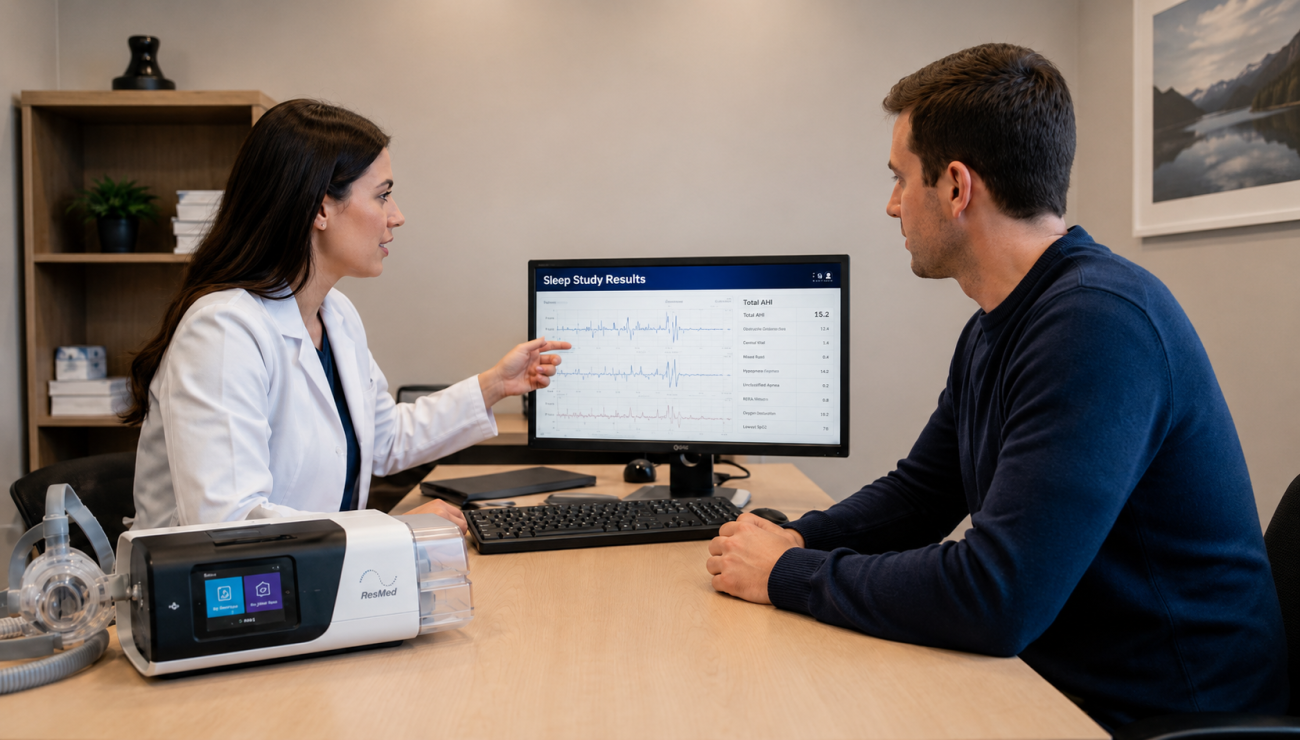
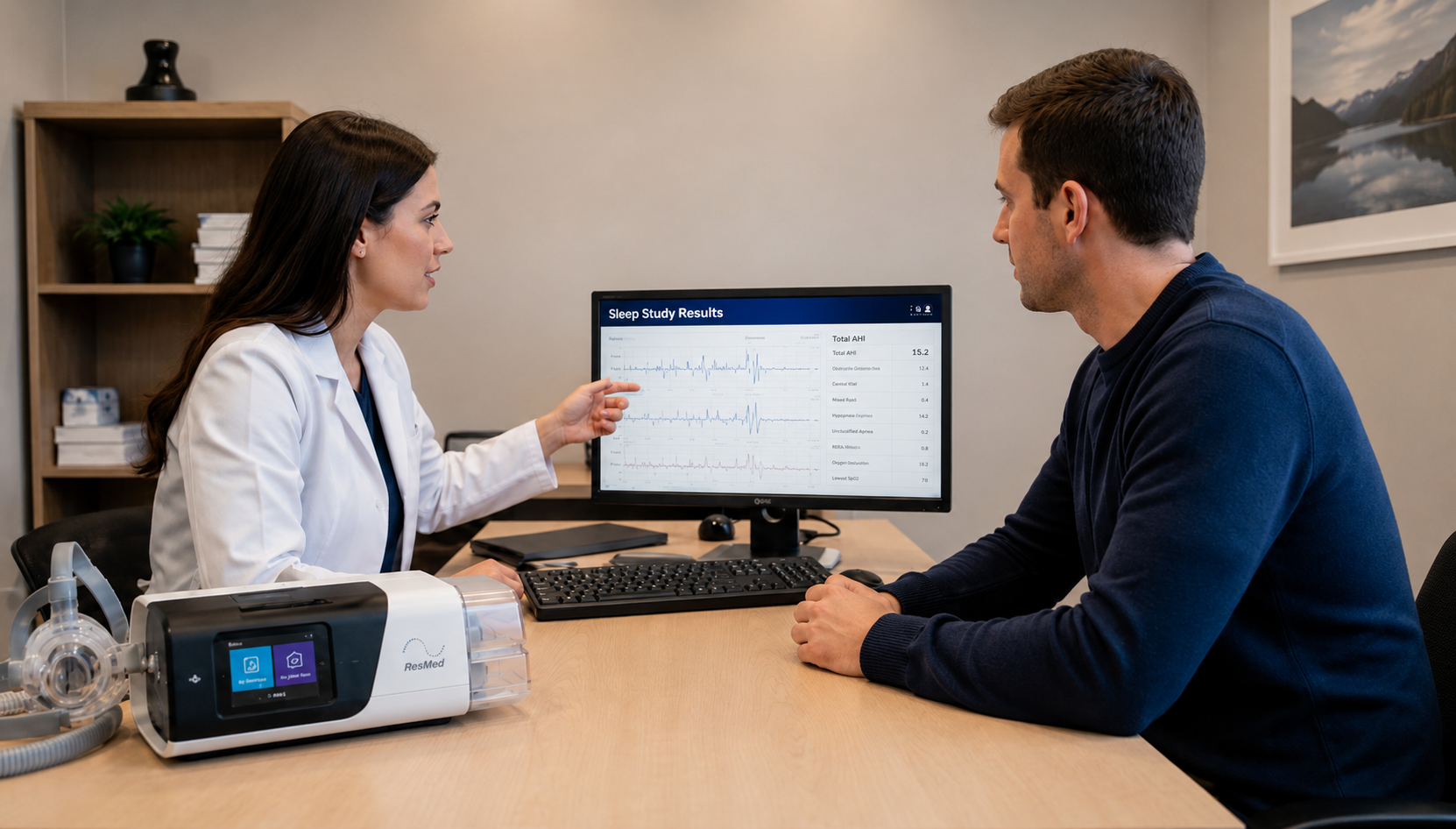
Getting a sleep apnea diagnosis isn’t just about confirming yes or no. The data from your sleep study tells a more detailed story. It reveals how often breathing interruptions happen per hour and how much your oxygen levels drop during the night.
A clinic worth your time will walk you through those results clearly. You should leave knowing what your numbers mean and what comes next. If your diagnosis is missed or misread, your treatment won’t work. That’s why the quality of the clinical review matters as much as the test itself.
What Is CPAP Therapy and What Should You Expect?
CPAP stands for continuous positive airway pressure. It is the standard treatment for obstructive sleep apnea. CPAP works by delivering a steady stream of air through a mask you wear while sleeping. This keeps your airway open and prevents the breathing interruptions that disrupt your rest.
For most people, the adjustment period takes a few weeks. However, the right clinic doesn’t just hand you a machine and send you home. They walk you through setup, explain proper mask fit, and check in regularly as you get used to therapy.
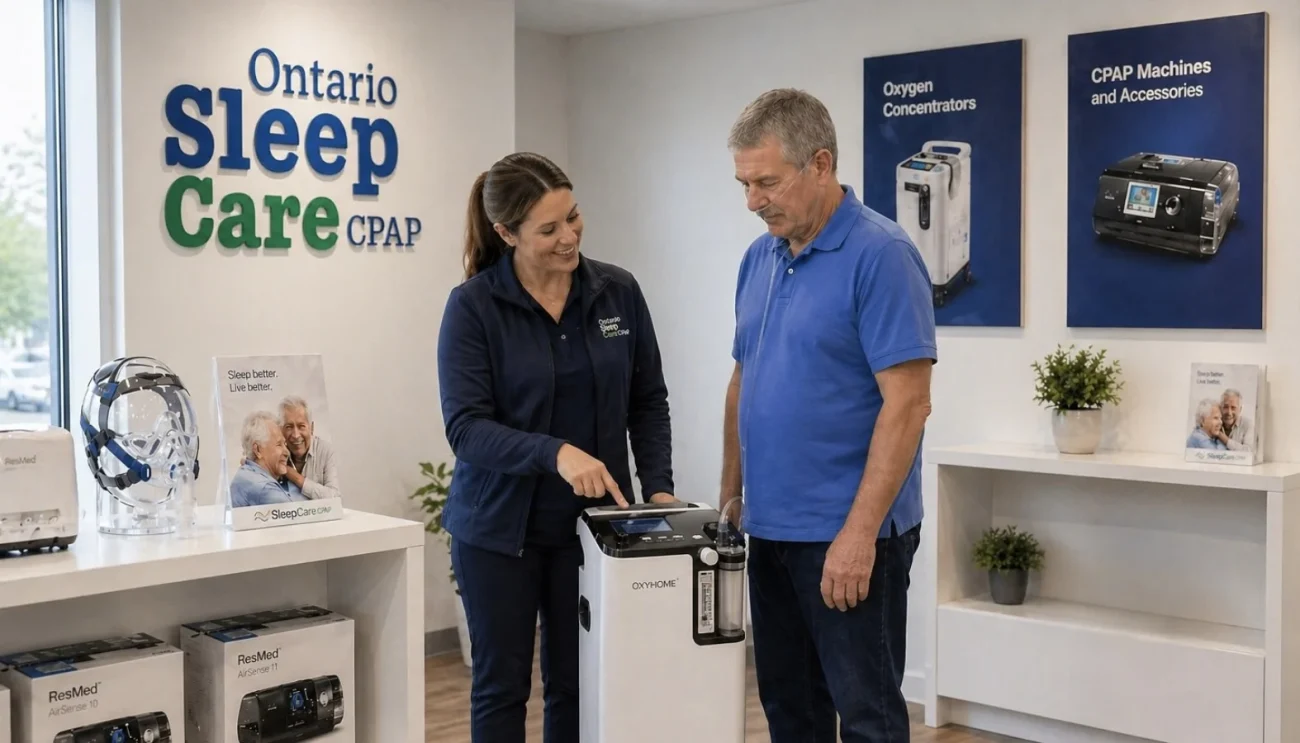
When evaluating a CPAP clinic in Ontario, a few things matter:
- Trained respiratory professionals on staff who understand how to set up and adjust your equipment
- Clear education before you leave, so you understand how the device works and who to call if something feels off
- Ongoing follow up care, because your needs can change over time and your clinic should be checking in
- Help navigating funding, since OHIP and the Assistive Devices Program (ADP) may cover part of your equipment costs
CPAP vs. Oxygen Therapy: Understanding the Difference
These two treatments are often confused, but they serve different purposes. CPAP therapy is the primary treatment for obstructive sleep apnea. It keeps your airway open while you sleep.
Oxygen therapy, on the other hand, delivers supplemental oxygen to patients whose blood oxygen levels remain too low due to other medical conditions. Most people with sleep apnea do not need supplemental oxygen. For most patients, CPAP therapy alone resolves breathing disruptions and stabilizes overnight oxygen levels.
Therefore, if you are seeking care for sleep apnea, CPAP is almost certainly the treatment your care team will discuss with you.
Questions Worth Asking Before You Commit
Before booking at any clinic, it’s reasonable to ask:
- Do you offer both in clinic and home sleep testing?
- Who reviews my results, and what are their qualifications?
- How long does it typically take to get from referral to diagnosis?
- What does ongoing care look like after my test?
- Can you help me understand my funding or insurance options for CPAP equipment?
The answers will tell you a lot about how the clinic operates. A team that is confident and transparent about these things, like the Ontario Sleep Care team, is usually one that’s invested in actual outcomes and not just throughput.
Why Long Term Support Matters
Sleep apnea is a chronic condition. For most people, it doesn’t just get diagnosed and go away. Therapy needs to be monitored, and equipment needs to be maintained. Additionally, some patients need to adjust their treatment as their health changes over time.
The right clinic isn’t just the one that hands you a diagnosis fastest. It’s the one that’s still with you six months and two years later. They check that your CPAP therapy is actually working, answer your questions, and make adjustments when needed.
For patients wanting to learn more before their first appointment, Ontario Sleep Care’s patient resources and signs and symptoms guide are good starting points.
Next Steps
If you’ve been putting this off, here’s a clear path forward:
- Talk to your family doctor about your symptoms and ask for a referral
- Book a sleep apnea test at a reputable sleep study clinic in Ontario
- Review your results with a qualified respiratory professional
- Discuss CPAP therapy options with your care team
The sooner you get an accurate picture of what’s happening during your sleep, the sooner you can do something about it.